How Search Is Changing
Traditional SEO has always focused on ranking in Google's blue-link results. That approach still matters, but it's no longer the whole picture.
AI-powered tools are increasingly becoming the first point of contact when people look for information. When someone asks ChatGPT for a recommendation, uses Perplexity to research a purchase, or reads a Google AI Overview before clicking through to a website, they're using a fundamentally different kind of search - one where being listed first isn't always the goal.
The goal is being cited.
What Is GEO?
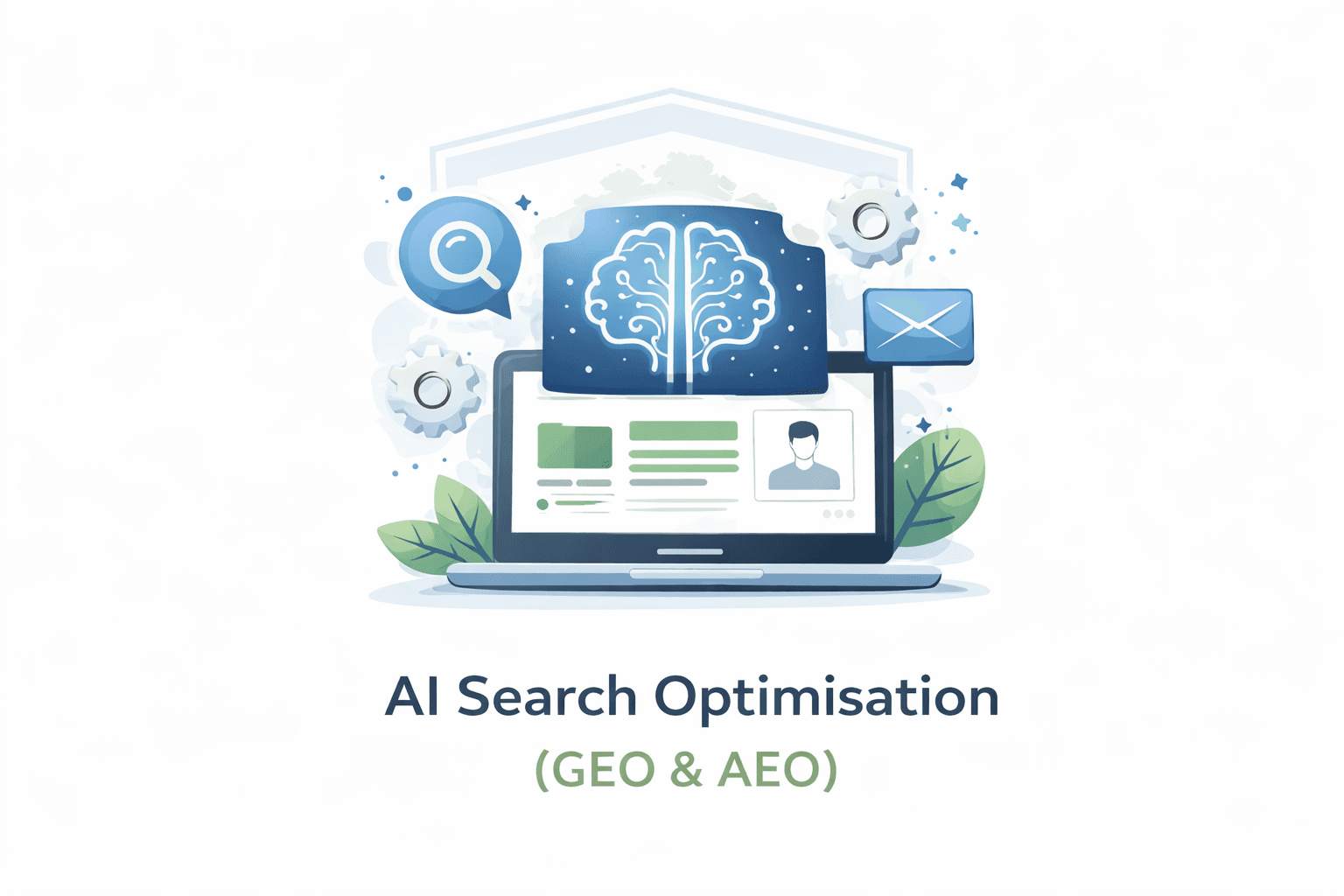
Generative Engine Optimisation (GEO) is the practice of optimising your content so that it gets cited or referenced by AI-generated search results.
When an AI tool generates a response to a query, it draws on content from across the web. The businesses and websites that are cited are the ones that have established clear authority on a topic, structured their content in a way that AI systems can interpret, and built the kind of credibility signals that these platforms look for.
GEO is not about gaming an algorithm. It's about creating genuinely useful, well-structured, authoritative content that AI tools are more likely to surface.
What Is AEO?
Answer Engine Optimisation (AEO) focuses specifically on getting your content to appear in direct answer formats - including Google's AI Overviews, featured snippets, and voice search responses.
These formats bypass traditional click-through behaviour entirely. A user asks a question and receives an answer directly on the results page. For businesses, this means that even if a user never visits your site, they may still encounter your content through an AI-generated answer.
AEO strategies focus on:
- Structuring content around specific questions and answers
- Using clear, direct language that AI systems can parse easily
- Implementing schema markup so search engines understand your content
- Building topical depth so your site is recognised as an authority on a subject
Why This Matters for Businesses
The shift to AI-powered search is still early, but the trend is clear. Businesses that adapt now will have a meaningful advantage as these platforms continue to grow.
There are two practical reasons to act:
- Visibility in AI results is not automatic - it requires deliberate content strategy and technical implementation
- Early movers benefit most - as with traditional SEO, authority takes time to build
Businesses that wait until AI search becomes dominant will find themselves starting from scratch in a much more competitive environment.
How to Optimise for AI Search
The foundations of AI search optimisation overlap significantly with good SEO practice:
- Create authoritative, in-depth content on topics relevant to your business
- Structure content clearly with logical headings, concise answers, and supporting detail
- Use structured data (schema markup) to help search engines understand your content
- Build topical authority across a subject area rather than producing disconnected content
- Maintain consistent entity information - your business name, address, and contact details should be consistent across the web
Beyond these foundations, GEO and AEO require a more specific approach to content planning - identifying the questions AI tools are likely to answer in your space, and ensuring your content is positioned to be cited in those responses.
Getting Started
If you're unsure how your business currently performs in AI-powered search environments, an SEO audit can help identify gaps and opportunities. You may also find our guide on technical SEO audits useful as a starting point.
Working with an SEO consultant in Surrey experienced in AI search optimisation can help you build a strategy that works across both traditional and emerging search platforms.
Book a free 15-minute consultation to discuss how AI search optimisation applies to your business.
Want to improve your search visibility?
Book a free 15-minute SEO consultation with Surrey Search Squad.
Book FREE SEO Call